The Office Park Call That Started With One Ceiling Tile
A property manager off the east side of Union City called us on a Monday after a tenant complained about a single dark ceiling tile in a conference room. The previous roofer had patched the same area twice. Both patches held water out of that specific spot, and both times the leak migrated. When our crew got up on the EPDM membrane, the seam directly above the conference room was tight. The actual entry point sat almost eighteen feet north, where a rooftop unit curb had pulled away from the flashing. Water was running under the membrane along a low spot and dripping through the first deck penetration it found.
This is the part most building owners do not realize. On a flat roof, the wet ceiling tile almost never sits directly under the leak. We use infrared scanning and moisture probes to trace the wet insulation back to its source, which is the same approach covered in our piece on moisture mapping with thermal imaging. Without that trace, you patch symptoms forever.
The property manager asked a fair question after we showed him the curb flashing: why had two previous roofers missed it? The honest answer is that neither one had pulled the membrane back to look at the insulation, and neither had walked the full roof with a moisture meter. They had stood under the wet tile, looked up, gone outside, and patched the closest seam they could see. That approach works on a pitched shingle roof maybe half the time. On a flat assembly with saturated insulation, it fails almost every time, because the water has already found a path that ignores gravity in the way a homeowner expects it to behave.
The Warehouse Where Ponding Hid the Real Problem
A Union City warehouse owner called after a heavy spring rain left water standing six inches deep over half his roof. He assumed the drains were clogged. They were not. The roof deck had sagged between joists over twelve years, and the low spots had grown deep enough that the internal drains sat above the water line. The membrane itself was sound. The structure underneath had relaxed.
We installed two tapered insulation crickets to redirect flow toward the drains and resealed the drain bowls. Total repair cost ran in the mid four figures, far less than the full replacement another contractor had quoted. Ponding does not always mean the roof is finished. Sometimes it means the drainage plan needs help.
The follow up matters here too. We came back six weeks later after another hard rain to confirm the crickets were doing their job. Standing water cleared within thirty six hours of the rain stopping, which is the threshold most membrane manufacturers use before warranty coverage gets affected. The owner had been one bad winter away from ice loading that sag into a deck failure. Sometimes the cheapest repair is also the one that buys you the most structural life.
The Apartment Building With Active Water Coming In
A property owner near downtown Union City called during a steady overnight rain. Water was running down a hallway wall on the top floor. The flat roof was a modified bitumen system about fourteen years old. With active intrusion happening, the first priority was not the permanent repair. It was getting a dry in over the failed area so the inside of the building stopped getting wet. Our crew got up between rain bands, located three blistered seams over the affected unit, and installed a temporary peel and stick patch large enough to cover the entire suspect zone.
The next clear day, we came back, cut out the wet insulation, dried the deck, and installed a permanent membrane repair. The interior side became a water damage job, with drying equipment running for four days. For property owners weighing how a roof leak turns into an interior claim, the breakdown in our commercial roofing repair and replacement cost guide tracks closely with what these jobs actually run.
How Aging Membranes Tell You They Are Tired
Most of the Union City flat roofs we repair are between ten and twenty years old. They rarely fail all at once. They give signals first. Blistering across a south facing slope usually means trapped moisture from a long ago installation flaw, finally cooking off in summer heat. Alligatoring on a built up roof points to the top coat losing its oils, which is often fixable with a recoat rather than a tear off. Open seams on EPDM almost always trace back to the original adhesive giving up at the lap, especially on roofs installed before the industry shifted to seam tape.
The owners who catch these signals early spend a fraction of what owners who wait spend. A reseal across a few hundred linear feet of seam is a budget line. A full tear off after the deck has gotten wet is a capital project.
The Restaurant Where the Leak Was Not From the Roof
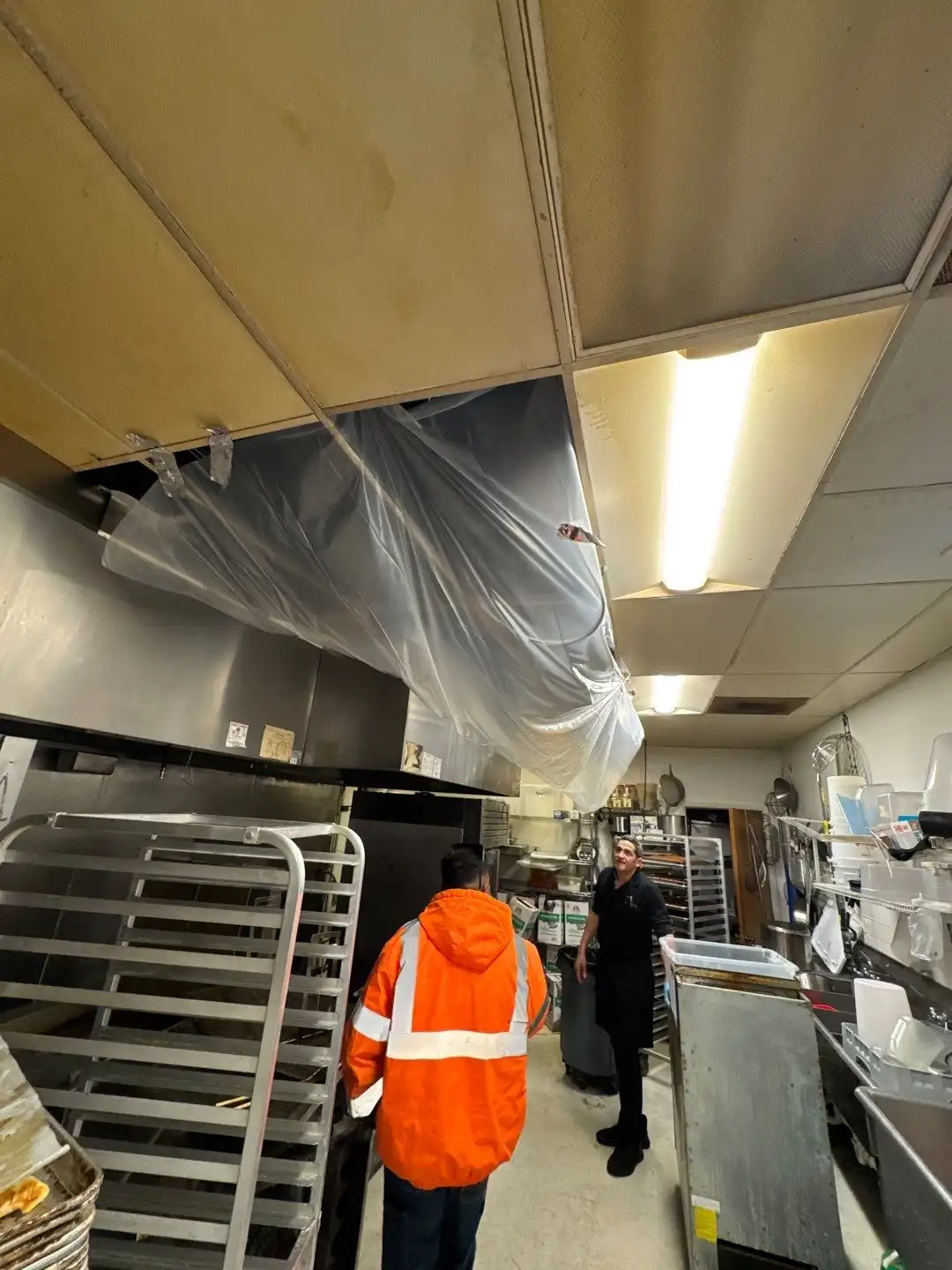
One Union City restaurant owner called convinced her flat roof was failing. Water dripped from a vent boot in the kitchen ceiling every time the dishwasher ran. We went up expecting a flashing issue. The roof was clean. The leak was a kitchen exhaust line condensing inside the ceiling cavity, running down a stud, and exiting at the lowest penetration. Total roof repair needed: zero. We told her directly that the roof did not need work, and pointed her to a plumber. If we cannot help, we will tell you that. The same pattern shows up in homes too, which is why our team often pulls in the attic water damage and roof leak restoration playbook when symptoms point one way but the source is hidden somewhere else.
She called back three weeks later. The plumber had found an uninsulated exhaust run in a cold soffit, wrapped it, and the dripping stopped completely. The roof inspection still had value because it ruled out the most expensive possible cause before she spent money chasing it.
What These Calls Have in Common
Across every one of these Union City jobs, three patterns repeat:
- The visible damage was nowhere near the actual leak source
- Honest diagnosis saved the owner thousands compared to the first quote they received
- Stopping active water intrusion came before the permanent repair, every time
That sequence is how Union City Commercial Roofing approaches every flat roof call. Diagnose first, dry in second, repair third.