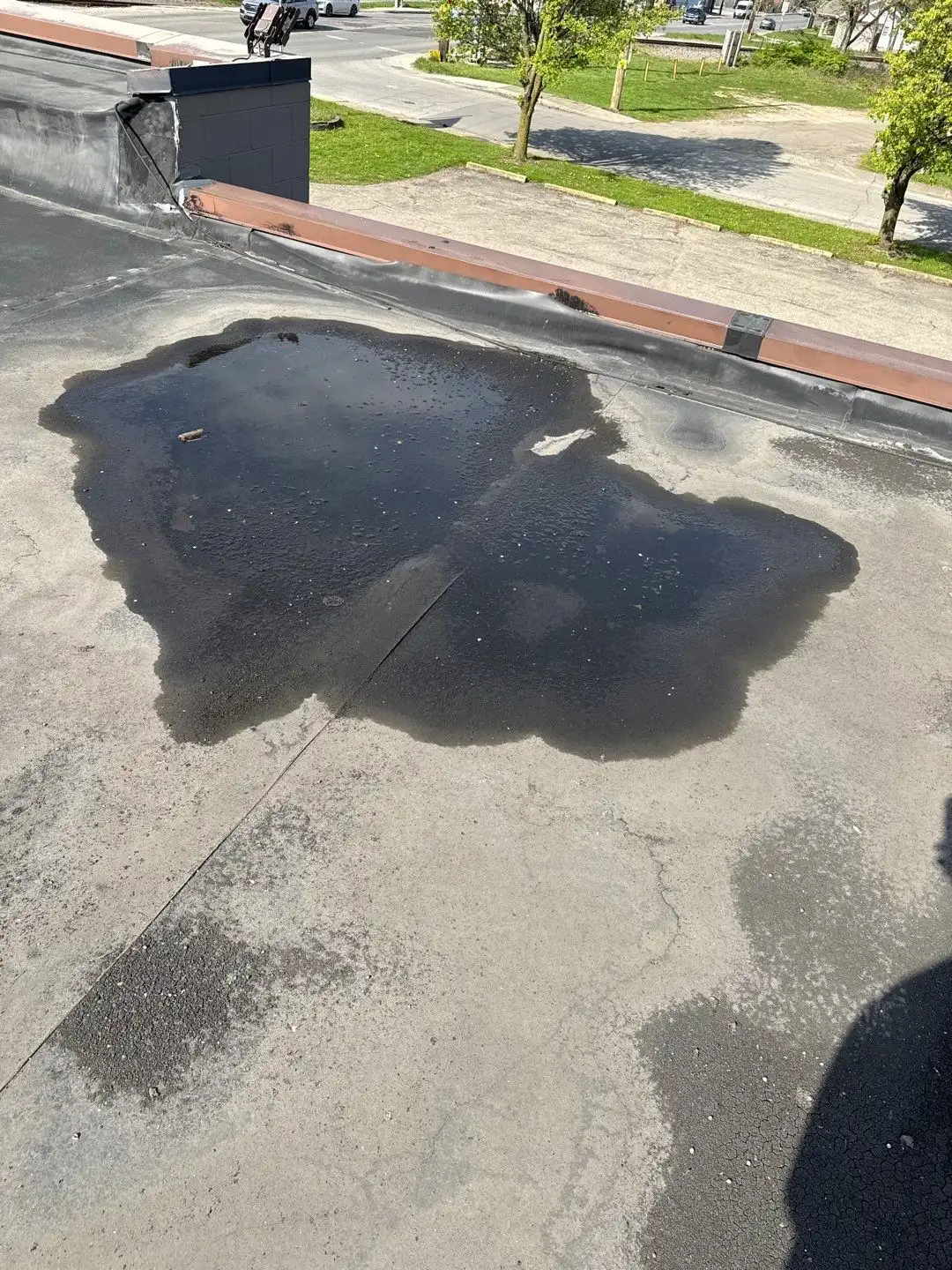
How hail damages a commercial roof
Understanding how hail harms a roof helps a Union City owner grasp why the damage matters and why it is not always obvious. Hail affects different roofing systems in different ways, but the underlying harm is similar.
Impact damage to the membrane
On membrane roofs, hail impacts can bruise, fracture, or puncture the membrane and the materials beneath it, compromising the roof's integrity even when the surface looks largely intact. The impacts may weaken the membrane or create small breaches. For a roof, hail's impact damage can range from subtle bruising that weakens the membrane to outright punctures, and even the subtle damage matters because it can develop into leaks over time as the weakened areas fail.
Damage to surfacing and protective layers
Hail can damage the protective surfacing of a roof, knocking granules off a surfaced roof or marring protective coatings, which exposes the underlying material to accelerated weathering. The loss of the protective layer shortens the roof's life even without an immediate leak. For a Randolph County roof, this damage to the surfacing or coating is a way hail harms the roof that is easy to overlook, since the roof may not leak immediately, but the exposed material weathers faster, reducing the roof's remaining life.
Damage to metal and other elements
On metal roofs and metal roof elements, hail can dent the panels and damage finishes and seals, which beyond the cosmetic denting can compromise protective coatings and seals, opening the way to corrosion or leaks. Flashings and other metal details can also be affected. For a Union City roof with metal panels or elements, hail's denting and seal damage can compromise the protection those elements provide, which matters for the roof's integrity beyond the visible dents.
Damage that worsens over time
A key aspect of hail damage is that it often worsens over time, with weakened or breached areas progressing into leaks and the loss of protective layers accelerating weathering, so damage that seems minor right after the storm can become serious months later. This delayed progression is why prompt attention matters. For a roof, hail damage left unaddressed tends to develop into bigger problems, which is the central reason to catch and address it promptly rather than assume a roof that is not leaking is undamaged.
Why hail damage is serious
Hail damages a roof through membrane impacts, surfacing and coating loss, and damage to metal elements, much of which worsens over time into leaks and accelerated failure even when it is not immediately obvious. For a Randolph County owner, understanding this explains why hail damage warrants prompt assessment, since the harm is real and progressive even on a roof that looks largely intact and is not yet leaking after the storm.
Get hail damage properly assessed
The broader point about hail damage is that the absence of an immediate leak is not evidence the roof escaped harm, since much hail damage is subtle, hidden, or slow to develop. A Union City owner who assumes an intact looking roof is undamaged may discover leaks months later, after the insurance window has narrowed and the damage has spread. The roofs that come through a hailstorm well are the ones whose owners had them inspected promptly, finding the damage while it was contained and the options were open.
Finally, the credibility of the assessment matters as much as its thoroughness, since a claim rests on establishing that a real hail event caused the documented damage. A owner whose assessment includes meteorologist verified confirmation that significant hail fell has stronger support than one relying on an unverified estimate. That combination, thorough damage documentation plus credible event verification, is what makes the response to hail both protective of the roof and defensible for an insurance claim, which is the goal after a hailstorm.
It also helps to treat the insurance dimension as time sensitive, because sudden hail damage is typically covered but claims have limits and depend on tying the damage clearly to the storm. A Randolph County owner who acts promptly, documenting the damage and verifying the hail event while everything is fresh, is in a far stronger position than one who waits. Coverage depends on the policy and carrier, so prompt, credible documentation, rather than delay, is what preserves the opportunity that hail damage coverage represents.
The broader point about hail damage is that the absence of an immediate leak is not evidence the roof escaped harm, since much hail damage is subtle, hidden, or slow to develop. A Union City owner who assumes an intact looking roof is undamaged may discover leaks months later, after the insurance window has narrowed and the damage has spread. The roofs that come through a hailstorm well are the ones whose owners had them inspected promptly, finding the damage while it was contained and the options were open.
Finally, the credibility of the assessment matters as much as its thoroughness, since a claim rests on establishing that a real hail event caused the documented damage. A owner whose assessment includes meteorologist verified confirmation that significant hail fell has stronger support than one relying on an unverified estimate. That combination, thorough damage documentation plus credible event verification, is what makes the response to hail both protective of the roof and defensible for an insurance claim, which is the goal after a hailstorm.
It also helps to treat the insurance dimension as time sensitive, because sudden hail damage is typically covered but claims have limits and depend on tying the damage clearly to the storm. A Randolph County owner who acts promptly, documenting the damage and verifying the hail event while everything is fresh, is in a far stronger position than one who waits. Coverage depends on the policy and carrier, so prompt, credible documentation, rather than delay, is what preserves the opportunity that hail damage coverage represents.
The broader point about hail damage is that the absence of an immediate leak is not evidence the roof escaped harm, since much hail damage is subtle, hidden, or slow to develop. A Union City owner who assumes an intact looking roof is undamaged may discover leaks months later, after the insurance window has narrowed and the damage has spread. The roofs that come through a hailstorm well are the ones whose owners had them inspected promptly, finding the damage while it was contained and the options were open.
Union City Commercial Roofing assesses hail damage on Union City commercial roofs, identifying the impact, surfacing, and seal damage that can lead to leaks. Call (765) 676-3491 to get your roof checked after hail. Proper assessment is what separates catching hail damage early from an expensive surprise.